Tuesday, 3 May 2011

DOWN TO GUILDFORD IN SURREY - MID APRIL


After several weeks of trying we finally found a weekend that fitted with visiting a university friend of Mark’s from …1984. We had caught the train down to Guildford in Surrey to finally catch up with Christine (who has barely changed at all in the past 25 years !) She came here for a holiday in the 90s with her then husband Jake and they never left. Now with two adult daughters Christine is heavily involved in local council affairs and leads a very busy life with her partner Geoff. They are surrounded by gorgeous green rolling hills (including some where Agatha Christie went missing!), the home of Lewis Carol, the family home of Richard Branson (he did not start from nothing!) and quaint, quaint villages. It was wonderful to catch up and stay the night and then be driven around some of the local sights and villages again under beautiful clear warm skies. 

Monday, 2 May 2011

YORK - 2ND WEEK OF APRIL

The middle of the kids’ three week end of term holidays, had all of us drive off for five days in Yorkshire and our first stay at Youth Hostels. We went first to York, a beautiful partially walled town, the birthplace of Guy Fawkes and scene of countless incredibly violent ‘War of The Roses’ battles. The city originally called Eboracum was founded in 71 AD by the Romans who made it the capital of their Province of Britannia Inferior. By 400 though as a result of the periodic flooding of the Ouse and Foss rivers the town was abandoned. In the early 5th century the area was settled by Angles, who called the town Eoforwic. The Vikings captured the city in 866 AD, and was finally incorporated into the Kingdom of England in 954.

The Wars of the Roses Battle of Towton was fought just outside York in March 1461. It is claimed to be largest and bloodiest battle ever fought on English soil. Around 50,000 soldiers from the Houses of York and Lancaster fought for hours amidst driving snowstorms on what was then Palm Sunday. Not long after the battle it was reported that 28,000 soldiers had died. As a result of this battle Edward IV displaced Henry VI as King of England, forcing the head of the Lancastrians and his key supporters out of the country. The brutality of some of the battles that went on was evident in the skeletons of ancient soldiers on display in Jorvik centre.

The town itself oozes history with Damascene/Baghdad style medieval narrow twisty lanes (The Shambles being the most well-known) with overhanging houses that almost touch above the laneways. 

We went to the Jorvik centre which is a recreation of the old Viking settlements of York. Complete with the sounds and supposed smells of the old settlement.

Set into the walls are various ‘bars’ or gateways. Miklegate Bar was the place where the heads of vanquished leaders or traitors were displayed. Some of the more notable exhibits included the heads of Henry Hotspur in 1403, Richard Plantagenet in 1461 and Thomas Percy in 1572.


The York Minster is truly amazing - very similar to Westminster Abbey but perhaps with a lighter, airier feel to it. The current 12th century Gothic cathedral was has its origins in its early 600s foundations. We went down to the undercroft to see Roman and Norman (10th century) remains as well as climbing the 2756 steps up to the top of the tower.


We also visited the York Dungeons, an archaeological dig centre and went on an evening ghost walk. We walked walking the city walls several times over including with a historian to learn about life in the time of Towton. The Transport Museum had a fabulous collection of old steam trains, including several Royal trains with the one used during the war complete with line on the bath so the king and queen could save water like everyone else! It made us think of Sally’s mum Margaret !
AISHA AT THE YORK TRANSPORT MUSEUM

WHITBY - 2nd week of april

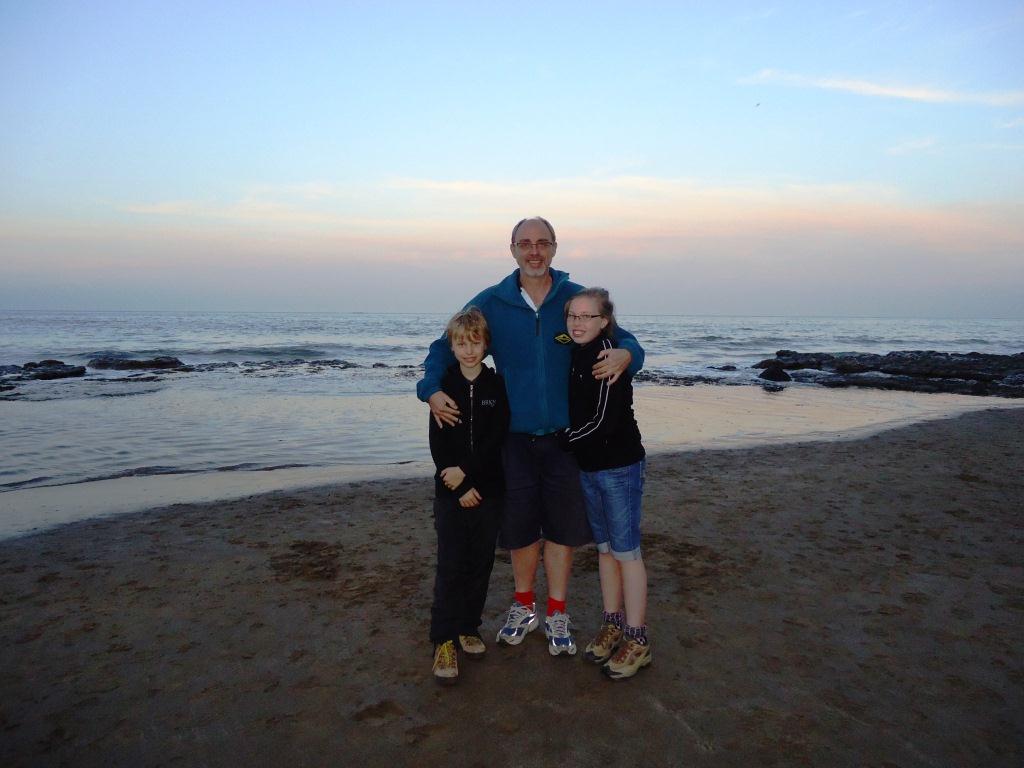
After York, Sally then headed back to London and Mark took kids up to Boggle Hole a small inlet just below Robin Hoods Bay (some legends say named as such because Robin kept a boat there for a quick escape ….)We loved this classic British seaside fishing town. 


The youth hostel where they stayed is an old converted mill with loads of atmosphere. They went for a quick walk along the pebble coast found a seahorse fossil and were nearly cut off by the very rapidly rising tide ! 


They went up to Whitby home of Whitby Abbey, Dracula and Captain Cook. We visited the house where a 19 yr old James Cook lived for 6 yrs as an apprentice. We were able to go up into the attic room where he and the other apprentices lived and to look out the round window onto Whitby harbour much as he would have done.


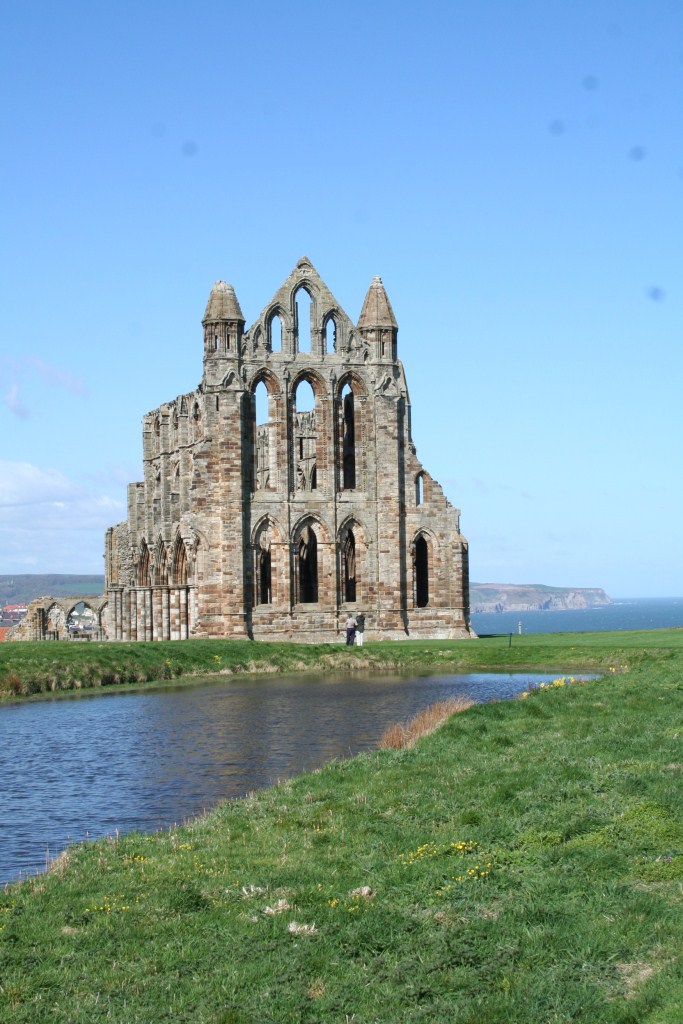
We also visited the ruins of Whitby Abbey which sits perched on a windswept cliff top. It is impressive now as a ruin and would have been simply astounding in its day.  Apart from its own history Whitby Abbey was also the location that Bram Stoker chose for Dracula to be peeled out of his coffin after his journey from Europe. 


We also stopped in at Scarborough and sat next to WWII bunkers on the beach. 

STRATFORD UPON AVON, WARWICK CASTLE AND BANBURY CROSS IN EARLY APRIL.


The first weekend of the end of term holidays, had us staying at another farm stay this time outside Stratford Upon Avon.  No need to explain much about Stratford.  We saw a fantastic performance of Comedy of Errors by Royal Shakespeare Company aimed at kids, visited several, but not all of the Shakespeare houses.


We went to the amazingly well preserved Warwick Castle just 20 minutes away from Stratford. The castle was built by William the Conqueror in 1068. From 1088, the castle traditionally belonged to the Earl of Warwick, and it served as a symbol of his power. The castle was taken in 1153 by Henry of Anjou, later Henry II. I. Under the ownership of Richard Neville – also known as "Warwick the Kingmaker" – Warwick Castle was used in the 15th century to imprison the English king, Edward IV.t was used as a fort until the early 17th century, when Sir Fulke Greville converted it to a country house. It was then owned by the Greville family until as recently as 1978.


Again Sally ended up head on home while Mark & the kids stayed on. They wandered around the farm picking some of the bazillions of daffodils that dotted almost every piece of public land everywhere we went in March and early April. 


They also visited the Stratford butterfly farm where William was able to convince the butterflies that he was, in fact, not a boy but a flower. 


On  way home we detoured to Banbury to see Banbury Cross. The 'new cross' is a short distance away from the 'old cross'. Nearby is a statue to the 'fine lady upon a white horse'. 


BANBURY CROSS

A FINE LADY UPON A FINE HORSE.


THE LAKES DISTRICT IN MID MARCH


Back in mid-March we had three days up in the Lake District in Cumbria around Kendall and Keswick. The Hi Comm didn’t take Australia Day off but did take Canberra Day so we decided to head away. We drove up to Litchfield on the Friday night, stayed in a cheap chain hotel by the motorway. Before heading off the next day we had a bit of a look around the three spired cathedral

We were lucky in that there was a display of some of the earliest versions of the King James' Bibles including some of the first to be written, illegally at the time- late 1400s, in English rather than Latin. The earliest on show was from and although written in English was almost unintelligible as such. 


We had booked three days in a National Trust listed farm house with spectacular views of the surrounding fells (hills) behind Derwent Water.  


THE VIEW FROM OUR ROOM


Sally and Aisha went on a walk very early one morning to the top of one of the hills behind the farm and enjoyed views of an area that was absurdly Tasmanian in its beauty.


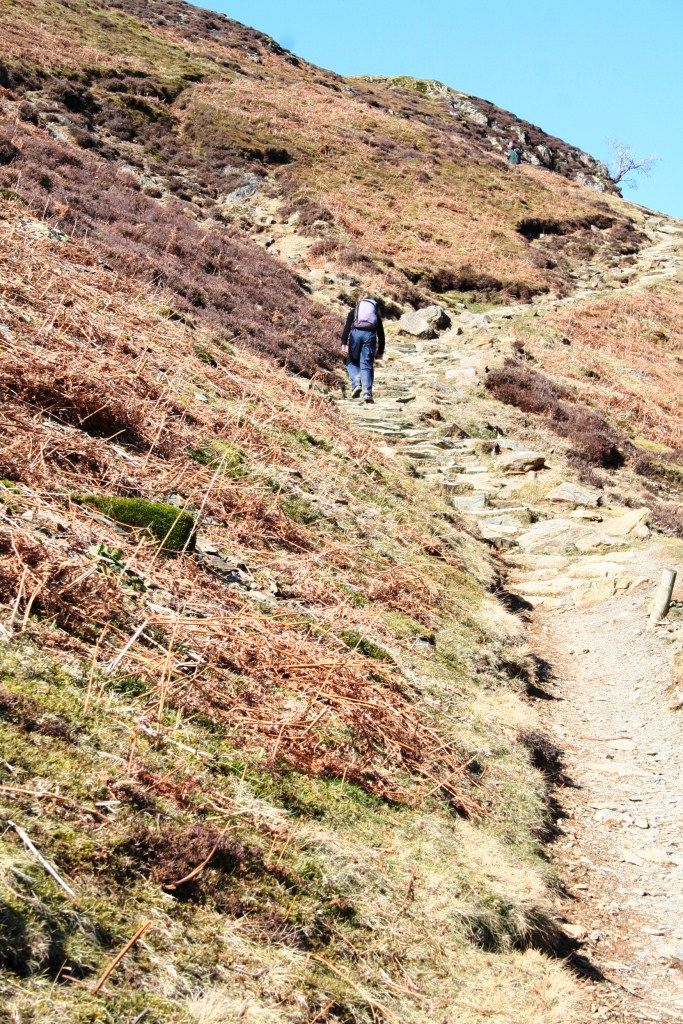
Later, we all climbed the Catbells hills that we looked across to from our rooms – a not insignificant walk which the kids did really well.  


This was followed by a trip back to Keswick on the ferry launch and a walk around the lake, including a race up some steps between mark & William where ONE of them tried to cheat !


The next day we saw our third set of circle of stones since arriving, the others being Avebury and of course Stone Henge but these, Castle Rigg, were in the most outstanding location surrounded by fells.  Amazingly, there are apparently over 1,000 sets of circles in the British Isles and Atlantic Europe.


We were incredibly lucky and had sublime weather - clear and bright.  We visited quaint villages treading where Beatrix Potter and William Wordsworth have trodden. There were many'Kissing Gates' which, at times, William seemed to be enthusiastic about. 

We went to the Cumberland Pencil factory where they produce the Derwent pencils we all grew up with (they have a special memory book for all the Australians and New Zealanders who visit).


We also went down an amazing slate mine, The Honnister Slate mine, reopened by a larger than life personality (think Steve Irwin) who was very sadly killed in his helicopter just 3 days before we visited. Staff took us on the first tour since his death. They were clearly very loyal to a man who rebuilt a local business from nothing and with no business background to a successful business with 40 staff.


We then went to meet up with a long-time friend of Sally’s, Bob, who was her Immigration mentor when she was a fresh young thing in the early 80s. He retired to a village near Carlisle after a long career in DIAC.  

BRIGHTON AND WHITE CLIFFS IN MARCH

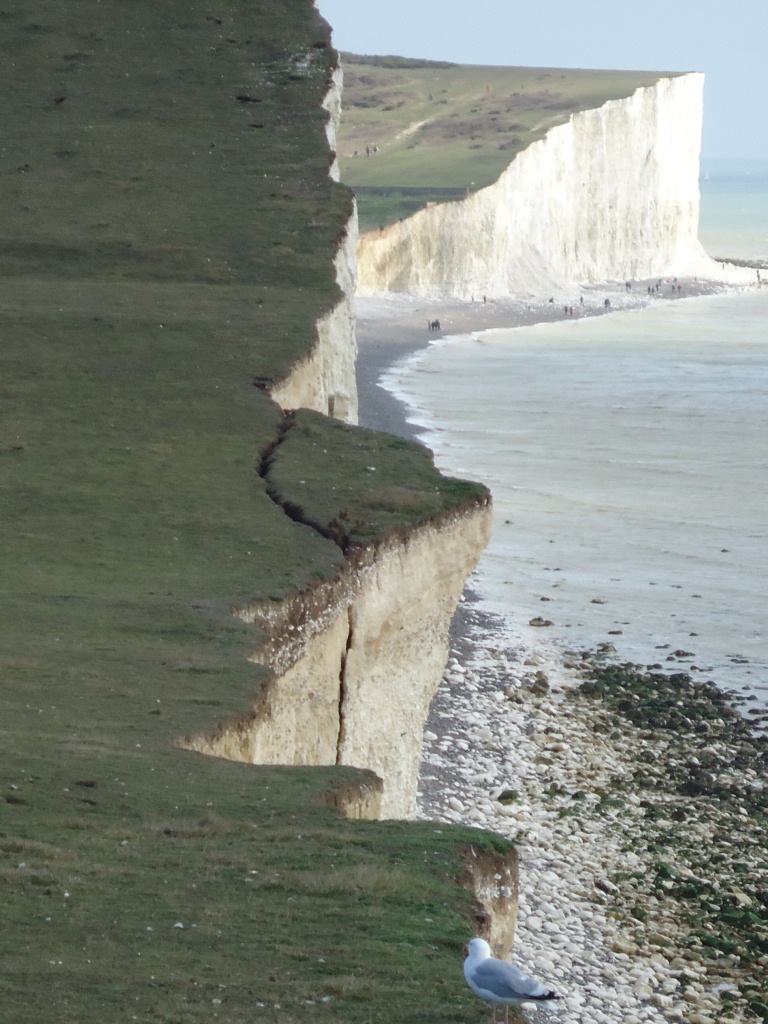
Early March had us catching a train to Brighton primarily to see the outrageous Pavillion built as a play palace for King George IV. It was unlike anything either of us has ever seen before. The opulence was scandalous but is so well preserved that it is fascinating. While Brighton has gazillions of ‘quaint B&Bs’ we found many of them to be either booked up months in advance, way too expensive or sounding better than they actually were. Finding accom that will accommodate 2 adults and 2 kids is tricky. Even places claiming ‘family rooms usually only hold 3 people. With reluctance we booked into The Premier inn a Travelodge style chain hotel which had family rooms (Beds for 3 + a trundle ). This chain hotel still holds the kids affection for having the best buffet breakfast they have had. We have to say, it was good. We went along to the Brighton Pier which on a cold early march evening was not buzzing but gave the kids opportunities for scary rides without the queues.  Sally went to a local Quaker meeting and we all went on a very good guided tour of a really interesting town. The last day had us catching a public bus out to Seven Sisters where we did a three walk along the white cliffs ( think White Cliffs of Dover) at the bottom of the South Downs.


TYPICAL UK BEACHWEAR MODELED BY AISHA
FUN ON THE PIER


IT IS A LONG WAY DOWN !
WE DIDN'T GET TOO CLOSE.

THE AMAZING BRIGHTON PAVILION


FEBRUARY IN BRADFORD & BATH

In mid-February, we went on a circuitous tour (and the Range Rover’s first English tour ! ) of Wiltshire. We visited the quaint village of Laycock which is a National Trust village with no modern infrastructure then went on to the Avebury Circle (purists say it is a better stone circle than Stonehenge - more stones over a larger area, but we saw Stonehenge in the same weekend and enjoyed both for different reasons). We stayed at our first Farmstay near Bradford on Avon and tucked into our first "full English breakfasts" which included ‘straight from the udder ’ milk, eggs from the chickens plus bacon and sausages made from previous pigs (we went and spoke nicely to the most piglets to apologise). 


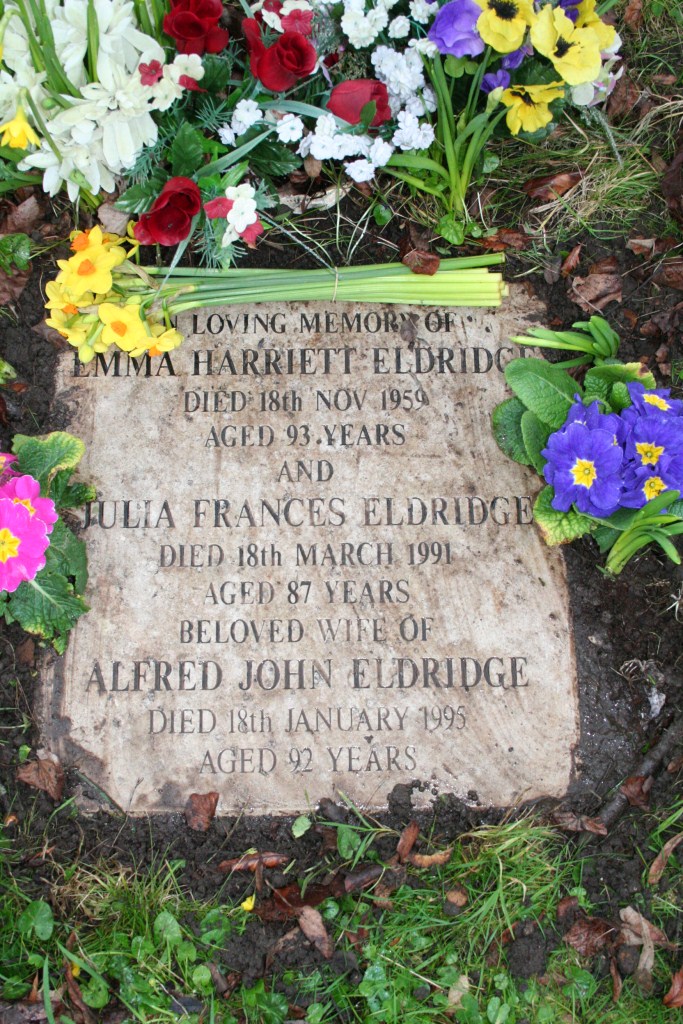
We went to the village of Eddington and found Sally's grandparent's home, picked some overhanging flowers from the garden and took them to the Priory.  After much searching in the cemetery, it was William who found his great grandparent's grave. We tidied up, planted some flowers and bulbs we'd brought and added some gumtree leaves.  We then went to nearby Trowbridge to see Sally's grandparents' and uncle's last home and another house she and her family stayed in for a short while when visiting in 1976.  The last stop in Trowbridge was the grave of Sally’s Uncle Geoffrey.


We went on to Bath to marvel at the Roman baths there. The main museum was amazing as were the still functioning Roman baths. Two hours was not enough to see whole thing. In Bath Abbey there is a memorial to Arthur Philip who retired to and died in Bath. We will have to return to see his grave which is in Bathampton a few miles away. Bath itself was beautiful and, as we have done so many times since, we marvelled at how many tourists were there, considering it was mid-winter, and pondered what it would be like in summer. 

Eddington Priory


THE RIVER AVON AT BATH
The Main Bath.
Before heading back to London we visited the impressive tythe barn at Bradford on Avon - where the church collected it's share of the town produce - walked along the river and climbed up the hill among the narrow alleys to the honey coloured sandstone millers cottages hanging to the side of the hill.